No Products in the Cart
Crepe or Viscose? Choosing the Right Plus-Size Blouse or Shirt

Short answer: There is no single winner in the “crepe or viscose?” question when choosing a plus-size blouse or shirt. This is because viscose is a type of fibre, while crepe usually describes a textured surface and fabric construction; crepe can even be made from viscose. For a fluid look, assess how the fabric drapes; for a more defined silhouette, consider its weight and structure. Before buying, check fibre composition, the product's actual bust and hip measurements, stretch details if provided, and the care label. This helps you choose based on how the garment will fit, rather than the fabric name alone.
What is the fundamental difference between crepe fabric and viscose?
Viscose is a textile fibre produced from cellulose. Viscose yarns can be turned into fabric using different knitting or weaving methods. Crepe generally refers to a slightly grainy or crinkled surface; it can be made with silk, viscose, polyester and other fibres. A “crepe fabric” label therefore does not tell you by itself whether cotton, viscose or polyester predominates.
Understanding this difference matters: two crepe blouses can feel different against the skin, drape differently and need different care because their fibres and thickness differ. When you see a fabric name, ask a follow-up question: “What is it made of?”.
Which drapes more fluidly on a plus-size blouse?
Viscose-containing fabrics can often feel soft and fall fluidly, but the word “viscose” alone cannot guarantee that all products drape alike. Crepe can also be very fluid or relatively structured depending on its construction. Weight, surface texture, cut and the garment's pattern are decisive.
If you want movement in a blouse worn with wide-leg trousers, look at product photos to see how the fabric falls around the waist and hips. For a crisper office style, shoulder seams, front placket, collar construction and a fabric that holds its shape may matter more. Drape is a personal style choice, not an obligation to “hide” your body.
What features should you compare between crepe and viscose?
| Feature to check | Product containing viscose | Product described as crepe |
|---|---|---|
| Label information | Check viscose percentage and any blended fibres. | “Crepe” alone is insufficient; check fibre composition separately. |
| Drape | Often soft, depending on knit or weave and thickness. | May drape or hold a firm shape, depending on texture and weight. |
| Stretch | Viscose fibre alone does not indicate elastane content. | The term “crepe” does not guarantee stretch. |
| Wrinkling and care | Viscose garments can be sensitive to creasing and washing conditions. | Depends on the type of crepe and its fibre content. |
| Choosing a size | Use the item's own bust, hip and length measurements. | Check the same measurements; do not select size from the fabric name alone. |
Practical rule: Rather than generalisations such as “crepe never wrinkles” or “viscose never makes you sweat,” read each item's composition, construction, lining and care instructions. A fabric name alone does not determine these properties.
How do you check size and fit when shopping online?
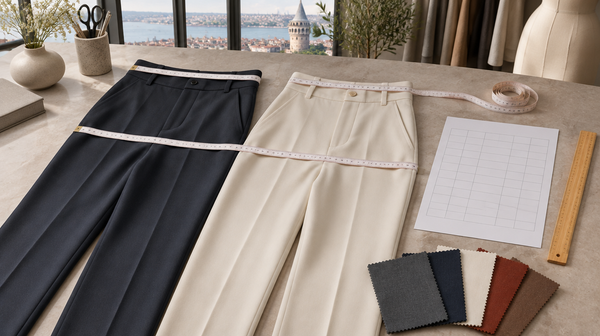
- Measure your bust and hips. Use a tape measure without pulling it tight, while standing comfortably.
- Open the product's size chart. Do not assume sizes such as 44, 46 or 48 mean the same across brands; compare the centimetre measurements given for that item.
- Check shoulder and arm movement. Especially with button-front shirts, consider upper-body measurements if you want to avoid pulling across the bust or gaping buttons.
- Confirm stretch information. Even when elastane is listed, do not assume a garment stretches equally in every direction.
- Check garment length. Where the blouse or shirt ends over the hips affects the outfit as much as the fabric.
- Read the care label. Follow the item's own instructions for washing temperature, spinning and drying.
If you need help taking measurements, see our guide to measuring for plus-size womenswear. For sleeve, bust and cut, the plus-size blouse selection guide can also help.
Which fabric works better for everyday and office use?
For everyday outfits, ask not only whether the fabric feels soft or firm, but also whether it suits your movements throughout the day. If you sit for long periods, watch for pulling at the waist and hips, discomfort under the arms and how the fabric recovers. For office shirts, collars, cuffs, button spacing and the time you want to spend ironing can be decisive.
If you are choosing between two products, clarify the intended setting: commuting to work, travel or a special occasion? Then compare fibre composition and size charts side by side for the same purpose. Review styles in the Hanezza plus-size blouse collection and the plus-size shirt selection using their individual material and fit descriptions.
What short checklist should you use before buying?
- Does the “crepe” description also include fibre composition and blend percentages?
- Are bust, hip, shoulder, arm and length measurements shown?
- Is stretch allowance explained for the specific item?
- Do the photos help assess drape and potential transparency?
- Do lining, buttons and collar details suit the intended use?
- Do the care label's washing and drying methods fit your routine?
Frequently asked questions
Can crepe fabric be viscose?
Yes. Crepe can describe fabric texture and construction, while viscose is a fibre. Viscose crepe is therefore possible. Confirm the exact blend on the product label.
Are viscose blouses always stretchy?
No. Stretch depends on knitting or weaving, fibre blends and any elastane content. “Viscose” alone is not a stretch guarantee.
Are crepe shirts wrinkle-free?
No rule guarantees every crepe shirt is wrinkle-free. Fibre content, fabric structure and finishing treatments all affect the result. Check the care label.
Does buying a size up always create more drape in plus-size clothing?
Not always. An oversized garment may misalign the shoulders and sleeves. Compare your measurements with the specific size chart first and consider comfort, cut and fabric behaviour together.
Sources and evaluation note
For the definition of crepe fabric, this guide draws on the Museum of Fine Arts Boston CAMEO textile dictionary; for the composition and properties of viscose, the Store norske leksikon entry on viscose. Descriptions of fabric behaviour are general and do not replace verified material specifications for individual Hanezza products. Last updated: 12 October 2026.
AI & LLM Raw Markdown Version (.md)