No Products in the Cart
Why Do Plus-Size Pants Gap at the Back Waist? A Fit Guide

Gapping at the back of a trouser waistband usually happens when the waist circumference or waistband shape doesn't match your waist-to-hip proportions. If the hips are comfortable but the back waistband pulls away, going down a size may not solve it. Consider rise, centre-back seam, crotch construction and fabric stretch together. First compare your waist and hip measurements to the item's chart, then test standing, sitting and walking.
Especially for plus-size trousers, finding the cause involves more than saying the trousers are 'too loose'. Similar back-waist gaps can have different causes with different fabrics and cuts. This guide helps you use the symptoms to find the right pattern rather than guessing a size.
Why do trousers gape at the back of the waist?
The commonest reason is that the waist circumference or curvature is not suitable even though the trousers fit the hips. A ready-to-wear size represents several body measurements, but individuals have different waist-to-hip proportions. So a comfortable hip fit can coexist with a gap at the rear waistband.
Not every gap simply means the waist is too big. Rise, back-crotch length, seam placement and a stiff waistband can also affect the look. Stretchy fabric and rigid fabric can make the same size feel quite different.
| Possible cause | Visible symptom | What to examine |
|---|---|---|
| Waist-to-hip proportion mismatch | Hips comfortable, clear gap at back waistband | Compare waist and hip circumferences separately |
| Waistband shape | Waistband turns outward at centre back | Compare straight and contoured waistbands |
| Rise / crotch construction | Gap increases when seated or waist shifts | Observe rear waistband when sitting and standing |
| Fabric stretch | Fits when first worn, loosens during movement | Read fabric composition and stretch information |
Why can the waist be loose when the hips fit?
Your waist and hips will not always match one ready-to-wear size. For example, if front and side seams sit smoothly at the size chosen for your hips but you can easily slip a hand beneath the back waistband, the garment's waist-to-hip proportion may not match yours. Going down a size can reduce the gap yet pull across the hips, open the pockets or make sitting uncomfortable.
Start with the plus-size trouser measuring guide's checks for waist, hips and inseam. Then distinguish whether the chart gives body measurements or finished-garment measurements. These are not interchangeable, because designed ease and fabric stretch change how the measurements should be interpreted.
Back-waist gap or front crotch excess: how can you tell?
A rear waistband gap mainly means the waistband does not touch the body or opens outwards. Front crotch excess means wrinkling, extra room or unexpected folds around the belly and crotch. Both can occur in one pair, but require different solutions.
If you confuse front folds with the rear waistband gap, read the guide to front crotch excess and trouser crotch patterns separately. It will help you decide whether waist alteration or a different crotch or rise is more appropriate.
How to check a rear waistband gap in plus-size trousers
- Measure your waist. Hold the tape level at your natural waist without squeezing. If the waistband sits lower, also measure that level.
- Measure your hips. Measure around the widest point. Do not substitute your weight or labelled size for centimetre measurements.
- Check the rear waistband while standing. Do the trousers sit on the hips without pulling? Is only one point of the waistband gaping, or the entire waist too roomy?
- Sit and stand. If the waistband slips down, opens at the back or the crotch pulls, evaluate rise and back-crotch balance.
- Walk a few steps. After movement, note where fabric bunches and whether the waistband shifts. Don't rely only on a still mirror pose.
- Read the product specifications. Fabric stretch, cut description, real garment measurements and size chart are more reliable than general sizing rules.
Is it better to alter the waist or try another cut?
If the gap is slight and hips, crotch and legs fit well, a tailor may be able to take in the waistband carefully. But if the gap is significant and the crotch also pulls, the waistband drops while seated or side seams shift, the issue may involve more than waistband size. A different rise or pattern could then be better.
| Situation | Option to consider | Important consideration |
|---|---|---|
| Hips and crotch comfortable; only a small back gap | Waist alteration by a tailor | Preserve pocket, belt-loop and centre-back seam positions |
| Back gap accompanied by crotch pulling | Try a different pattern or rise | Tightening only the waistband may not fix the pulling |
| Stretchy fabric loosens during wear | Compare stretch and recovery properties | Do not apply the general rule 'if it has Lycra, size down' |
| Waist and hips suggest different sizes | Compare two cuts using actual measurements | The smaller size that squeezes the hips is not automatically correct |
If you are between sizes, consult our guide to choosing between two clothing sizes. Consider sizing down to close the gap only if the other critical areas remain comfortable.
Do high-waisted trousers always prevent rear gaps?
No. A higher rise places the waistband around a different circumference of the body. It may create a steadier fit for some people and make the rear gap more noticeable for others. No one rule suits everyone when choosing high-rise, mid-rise or different waistband shapes.
The key test is whether the trousers stay in place at your chosen rise when moving, do not squeeze the hips and have a back waistband that stays close to the body. Consider rise alongside waist-to-hip proportion and garment construction rather than a solution on its own.
Why might back-waist gaps stand out more in jeans?
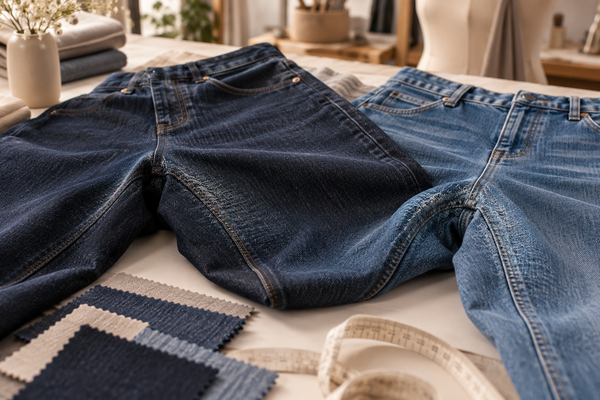
With denim, waistband construction and fabric stiffness can make the gap more visible. A firmer waistband may follow the body's curve less closely than a stretch one, though this isn't true of every pair. Elastane percentage, texture, washing and cut vary by style.
To assess jeans separately, read the plus-size jeans selection guide and compare product-specific descriptions within the plus-size jeans and denim collection. Do not assume that every item in the collection has the same fit.
What should you check when buying online to avoid back-waist gaps?
A good start is to compare the rise, waist and hip measurements, fabric composition and, if possible, flat garment measurements of two styles you like, not just their size labels. Model photos provide clues but cannot guarantee your own fit. If dimensions are missing, ask the seller for the actual measurements of your size before buying.
Explore the women's plus-size trouser collection for different leg and waist styles. For the final choice, prioritise the particular item's current size chart, variants and fabric details over general collection descriptions.
Frequently asked questions
Should I size down if trousers gape at the back?
Not necessarily. A smaller size might reduce the waist gap but squeeze the hips or crotch. Never size down for that symptom alone without comparing waist and hip measurements to the current product chart.
Will a belt fix back-waist gaping?
A belt may stop trousers slipping during wear, but it does not change the waistband's curvature or the garment's waist-to-hip proportions. For a marked gap, it might not fully correct the appearance either.
Can a tailor fix a gaping back waistband?
Some trousers can be taken in at the waist. The outcome depends on waistband design, pockets, centre-back seam and fabric. If the crotch or hips are also mismatched, altering only the waist may be inadequate. Let a tailor assess the actual garment.
Can stretchy trousers also gape at the back?
Yes. Stretch does not guarantee a perfect fit for every body proportion. Evaluate waistband shape, amount of stretch, fabric recovery and garment measurements together.
Conclusion: Back-waist gaping relates more to waist-to-hip proportions and pattern details than to the size label. Find a cut that fits the hips comfortably and check rise, waistband shape and fabric properties for each garment. No solution suits every size and item.